

DSCR HELOANs and DSCR HELOCs: Home Equity for Investment Properties
Access equity from your rental properties without refinancing your first mortgage. A DSCR HELOAN gives you a fixed-rate lump sum, a DSCR HELOC gives you a credit line, and both qualify on the property's rental income instead of tax returns or W-2s.
Updated August 2026






Featured In



Griffin Funding offers two ways to tap a rental’s equity: a DSCR HELOAN, a fixed-rate lump sum, and a DSCR HELOC, a revolving credit line you draw as you need it. Both are second mortgages, so your first mortgage and its rate stay exactly where they are. No tax returns, no W-2s, no pay stubs.
Investors use these loans to fund the next down payment, renovate a unit, or hold cash for the deal that hasn’t shown up yet. And they use them at scale: in 2025, the average HELOC on an investment property was $384,000, more than two and a half times the owner-occupied average, according to Griffin Funding’s analysis of federal HMDA data.
Why Get a DSCR HELOAN or DSCR HELOC?
Millions of investors hold first mortgages at rates they’ll never see again. Refinancing to pull cash out means giving up that rate on the entire balance. A DSCR second mortgage takes the opposite approach: leave the first mortgage alone and borrow only what you need, qualified entirely by the property’s rent.

Qualify on rental income:
The property’s rent does the qualifying. No tax returns, no W-2s, no pay stubs, and no personal debt-to-income calculation. If the rent covers the payment, you’re in business.

Keep your current rate:
Both products are second liens, so your first mortgage stays untouched. Only the new loan carries today’s rate, and only on what you actually borrow.

Pick a lump sum or a line:
The DSCR HELOAN pays out a fixed-rate lump sum with a predictable payment for the life of the loan. The DSCR HELOC opens a revolving line you draw against as deals come up. Same qualification, different tool.

No reserves required:
Unlike most DSCR first mortgages, these programs don’t require months of payments sitting in the bank. Your capital stays deployed.

Borrow through your LLC
Properties titled in an LLC or corporation qualify. You don’t have to move title into your personal name to access the equity.

Use the funds for any business purpose:
Down payment on the next property, renovations, reserves for vacancies, or paying off hard money. How you deploy it is up to you.
What Is a DSCR HELOAN?
A DSCR HELOAN is a fixed-rate home equity loan on an investment property that qualifies on the property’s rental income instead of your personal income. You receive the full amount as a lump sum at closing and repay it in equal monthly payments, while your first mortgage stays in place.
DSCR stands for debt service coverage ratio: the property’s monthly rent divided by the monthly payment. If the rent covers the payment, the loan qualifies. Griffin Funding never looks at your tax returns.
DSCR HELOAN: Key Features
- Investors who want to tap equity but keep the low first-mortgage rate they already have
- Fixed rate with terms of 15, 20, 25, or 30 years
- Loan amounts from $100,000 to $500,000
- One lump sum at closing with a payment that never changes
- DSCR as low as 1.0
- Prepayment penalty options from 5 years down to none, so you control the tradeoff between rate and flexibility
What Is a DSCR HELOC?
A DSCR HELOC is a revolving line of credit on an investment property that qualifies on rental income rather than tax returns or W-2s. Instead of one lump sum, you get a credit limit you can draw against, repay, and draw again during the draw period. Interest accrues only on what you’ve borrowed.
It works like a business line of credit secured by your rental. Draw for a down payment this quarter, pay it back when the flip sells, draw again for the next one, all without touching your first mortgage.
DSCR HELOC: Key Features
- Revolving credit line from $100,000 to $500,000
- Interest-only draw periods of 2, 3, or 5 years, with total terms of 20 or 30 years
- Variable rate tied to the prime rate
- DSCR of 1.1 or higher
- No prepayment penalty, ever
- An initial draw is required at closing; you can redraw as you repay
Both products qualify the same way: the property's rent against the payment. Here's what each program looks for, starting with the HELOAN. If you're close on any of these, talk to us anyway, because loan officers can often structure around a near-miss.
DSCR HELOAN Requirements

Loan Amount:
Minimum loan amount of $100,000; maximum of $500,000.

Credit Score:
680+ credit score required to qualify.

CLTV Ratio:
Borrow up to 80% combined loan-to-value, depending on credit score.

DSCR:
DSCR as low as 1.0 accepted.

Property Type:
Investment properties only: single-family, PUD, townhome, or 2-4 units.

Appraisal:
Appraisal with a comparable rent schedule (Form 1007) required to verify rental income. Loans up to $400,000 may qualify with a faster AVM valuation.
Prepayment Penalty:
Optional. Choose a prepayment penalty period for a better rate, or none at all.
DSCR HELOC Requirements
Line Amount:
Minimum line of $100,000; maximum of $500,000.
Credit Score:
720+ credit score required to qualify.
CLTV Ratio:
Borrow up to 70% combined loan-to-value.
DSCR:
DSCR of 1.1 or higher required.
Property Type:
Investment properties only: single-family, PUD, townhome, or 2-4 units.
Appraisal:
Lines up to $400,000 may qualify with an AVM instead of a full appraisal, which speeds up closing. Larger lines require a full interior appraisal.
Prepayment Penalty:
None. Pay the line down or off whenever you want.
Calculators
DSCR Loan Calculators
Use these tools to estimate your DSCR for a new purchase or refinance.


DSCR HELOAN vs. HELOC vs. Cash-Out Refinance
All three let investors tap equity, but they work differently. The DSCR HELOAN and DSCR HELOC are second mortgages that leave your first mortgage untouched; a cash-out refinance replaces it entirely. The HELOAN gives a fixed-rate lump sum, the HELOC gives a revolving line you draw as needed, and a cash-out refinance gives a lump sum but resets your first-mortgage rate and term.
| DSCR HELOAN | DSCR HELOC | Cash-Out Refinance | |
|---|---|---|---|
| Lien position | Second mortgage | Second mortgage | Replaces first mortgage |
| Effect on first mortgage | Untouched—keep your rate | Untouched—keep your rate | Replaced with new rate/term |
| How you get funds | Fixed-rate lump sum | Revolving draw as needed | Lump sum |
| Rate type | Fixed | Variable | Fixed |
| Prepayment penalty | Optional: 5 years down to none | None | Varies by program |
| Best for | A set amount while keeping a low first rate | Flexible, ongoing access | Larger cash-out or resetting the loan |
DSCR HELOAN
Fixed rate · Lump sum · First mortgage untouched
DSCR HELOC
Revolving draws · Variable rate · First mortgage untouched
Cash-Out Refinance
Fixed rate · Lump sum · Replaces first mortgage
Pros and Cons of DSCR HELOANs and HELOCs
- Keep your existing low first-mortgage rate
- Qualify on rental income, not personal income
- No tax returns or W-2s required
- Choose a fixed lump sum (HELOAN) or a revolving line (HELOC)
- No cash reserves required
- Available on LLC or entity-held properties
- No limit on the number of properties
- Adds a second payment on top of your first mortgage
- Investment properties only
- Requires a 680+ credit score (720+ for the HELOC)
- Must keep at least 20% equity, 30% on the HELOC
- Loan amounts capped at $500,000
- HELOAN may carry a prepayment penalty; HELOC rate is variable
- Rent must support a DSCR of 1.0, or 1.1 for the HELOC
Which DSCR Home Equity Product Is Right for You?
| Your situation | Fit | Why |
|---|---|---|
| I want cash but don’t want to lose my low first-mortgage rate | Strong fit—either | Both are second liens; your first mortgage stays untouched |
| I want a predictable fixed payment and a lump sum | DSCR HELOAN | Fixed rate, paid out as a lump sum, payment never changes |
| I want revolving access I can draw and repay as deals come up | DSCR HELOC | Draw, repay, and draw again during the draw period; interest only on what you use |
| My tax returns don’t show enough income to qualify conventionally | Strong fit—either | Both qualify on rental income; no tax returns or W-2s |
| My property is held in an LLC | Supported—either | Griffin allows entity-titled investment properties on both programs |
| My rental is a condo | DSCR HELOC | Condos are eligible on the HELOC program |
| I can document my income and want maximum leverage | Digital HELOC | Full-doc investment property HELOCs go up to 90% CLTV |
| I want to pull the most equity or reset my loan terms | Consider a DSCR cash‑out refinance | A cash-out refinance can access more and reset your rate/term |
Strong fit—either
Both are second liens; your first mortgage stays untouched
DSCR HELOAN
Fixed rate, paid out as a lump sum, payment never changes
DSCR HELOC
Draw, repay, and draw again during the draw period; interest only on what you use
Strong fit—either
Both qualify on rental income; no tax returns or W-2s
Supported—either
Griffin allows entity-titled investment properties on both programs
DSCR HELOC
Condos are eligible on the HELOC program
Digital HELOC
Full-doc investment property HELOCs go up to 90% CLTV
Consider a DSCR cash-out refinance
A cash-out refinance can access more and reset your rate/term
How Much Are Investors Borrowing Against Rental Properties?
A lot more than homeowners borrow against their houses. Griffin Funding analyzed every HELOC reported under the Home Mortgage Disclosure Act from 2022 through 2025 and found that investment-property credit lines averaged $384,000 in 2025, against $146,000 for owner-occupied lines. That gap held in every year of the data.
The volume is climbing too. Lenders originated 27,183 investment-property HELOCs in 2025, up 47% from the 2023 low, as investors chose second liens over surrendering the low fixed rates on their first mortgages.
Average investment-property HELOC line in 2025
Larger than the average owner-occupied line ($146K)
Investment-property HELOC volume originated in 2025
Growth in originations since the 2023 low
Source: Griffin Funding analysis of FFIEC/CFPB HMDA loan-level data, 2022–2025.
DSCR HELOANs and HELOCs by State
Griffin Funding lends on investment properties in all 50 states and Washington, D.C. Requirements for these programs are the same nationwide, but rents, values, and how much equity you can pull vary a lot by market. Pick your state below for local DSCR loan options, market rent data, and what typical properties there cash flow at.
FAQ
Frequently Asked Questions
DSCR HELOANs are specifically designed for investment properties. These investment property home equity loans qualify borrowers based on the property’s debt service coverage ratio rather than personal income. You don’t need to provide tax returns or traditional income verification. The loan allows you to leverage your property’s equity without refinancing your existing first mortgage, keeping your current rate intact while accessing additional capital.
Griffin Funding also offers a DSCR HELOC, a revolving credit line on investment properties that qualifies on rental income the same way. You draw funds as needed rather than receiving a lump sum, and there’s no prepayment penalty.
When deciding between a HELOC vs. a home equity loan for an investment property, consider that home equity loans provide a lump sum with predictable payments, while HELOCs offer ongoing access to funds.
If you’re considering a cash-out refinance instead of a HELOAN, use our DSCR refinance calculator to compare how much equity you can access with each option and see which better fits your investment strategy.
A DSCR HELOAN is a fixed-rate lump sum; a DSCR HELOC is a revolving credit line. Both are second mortgages on investment properties that qualify on rental income instead of tax returns. Choose the HELOAN when you know exactly how much you need and want a payment that never changes. Choose the HELOC when you want capital on standby that you can draw, repay, and draw again as deals come up.
Griffin Funding specializes in DSCR HELOANs for investment properties. Unlike traditional banks that require W-2s and tax returns, we focus on your property’s rental income to determine qualification. Our streamlined process makes it easier for real estate investors to access equity without the strict income documentation requirements of conventional lenders.
Getting a DSCR HELOAN is straightforward if you meet the basic requirements. You’ll need a 680+ credit score, at least 20% equity in the property (80% maximum combined LTV), a DSCR of 1.0 or higher, and documented rental income through lease agreements. The process is often simpler than traditional loans because there’s no personal income verification required. Working with Griffin Funding ensures efficient processing and approval.
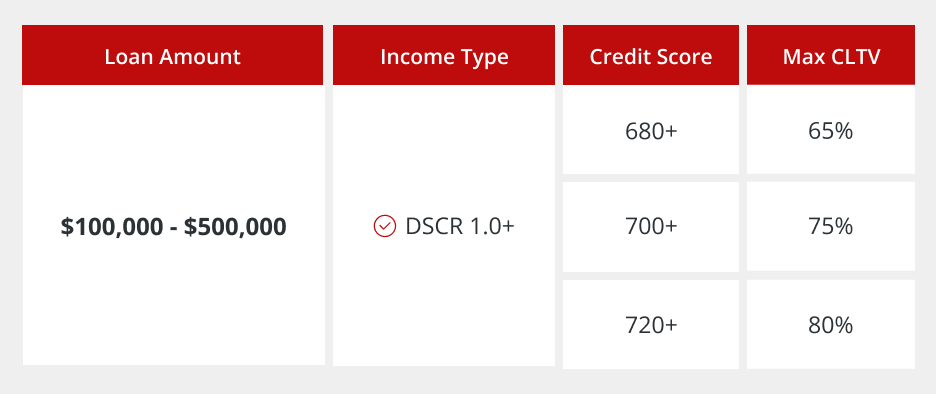
The DSCR HELOC has its own thresholds: 720+ credit and a 1.1 DSCR.
Yes, if the DSCR HELOAN is secured by the rental property itself, the interest qualifies as mortgage interest and is fully deductible as a rental expense on Schedule E. The funds must be used for business purposes such as property improvements, purchasing additional rental properties, or other investment-related expenses.
Note: Tax rules are complex and change frequently, so you should consult with a tax professional or CPA to understand how HELOAN interest applies to your specific situation and ensure proper documentation of how you use the funds.
Yes, you can obtain DSCR HELOANs on multiple investment properties. Each property must have sufficient equity (80% maximum combined LTV), generate adequate rental income (DSCR of 1.0 or higher), and you must maintain the required credit score and reserves.
There’s no limit on the number of properties you can leverage, making DSCR HELOANs an effective tool for investors building larger portfolios who need capital without selling assets.
Griffin Funding offers DSCR HELOANs from $100,000 to $500,000, up to 80% of your property’s combined loan-to-value. That means your first mortgage balance plus the HELOAN cannot exceed 80% of the appraised value, so you keep at least 20% equity. The exact amount also depends on your credit and the property’s DSCR.
No. A DSCR HELOAN is a second mortgage, so your existing first mortgage stays exactly as it is. You receive a fixed-rate lump sum of your equity behind that first loan. This is the main reason investors choose a HELOAN over a cash-out refinance when they already have a low first-mortgage rate.
Griffin Funding offers flexible prepayment penalty options on DSCR HELOANs: five-year, four-year, three-year, two-year, one-year, or no prepayment penalty at all. Choosing a shorter or no penalty typically affects your rate, so you can weigh the trade-off based on how long you plan to hold the loan.
No. Griffin Funding’s DSCR HELOC has no prepayment penalty; you can pay the line down or off whenever you want. The DSCR HELOAN offers optional prepayment penalty periods in exchange for a better rate, or you can choose none.
Choose a DSCR HELOAN when you want to keep your existing first mortgage and its rate. The HELOAN sits behind it as a second lien. Choose a DSCR cash-out refinance when you want to access more equity, want a single loan, or your current first-mortgage rate is no better than today’s rates. Both qualify on rental income rather than personal income.
Yes. Griffin Funding’s DSCR HELOC qualifies on the property’s rental income, so no tax returns, W-2s, or pay stubs are required. You’ll need a 720+ credit score, a DSCR of 1.1 or higher, and at least 30% equity remaining after the line.
You get an interest-only draw period of 2, 3, or 5 years, during which you can borrow against the line, repay it, and borrow again. An initial draw is required at closing, and interest accrues only on your outstanding balance. After the draw period, the balance converts to principal-and-interest payments for the remainder of the 20 or 30-year term.
Six months. Both programs require at least six months of ownership before you can borrow against the property’s equity. If you bought recently, that’s often the right window anyway: it gives you a lease in place and a payment history, both of which strengthen the file.
Not for these programs. DSCR HELOANs and HELOCs qualify using long-term lease income, and a lease must be in place on the property. If your portfolio is short-term rentals, ask us about our DSCR loan programs, several of which can qualify on short-term rental income.
Yes, and you can borrow more. If you can document income with W-2s or tax returns, Griffin Funding’s digital HELOC covers investment properties up to 90% combined LTV with a fast, online application. Bank statement qualification is also available for self-employed investors. The DSCR programs on this page exist for investors who’d rather qualify on the property’s rent alone.