

Is Being a Landlord Still Worth It?

 Written by Bill Lyons



Owning rental property has long been one of the most reliable paths to building real wealth in America. But between high interest rates, skyrocketing home prices, and an unpredictable housing market, more investors are beginning to ask themselves: Is being a landlord actually worth it anymore?
The short answer is that it depends. For the right investor in the right market with the right financing, investing in a rental property can still be profitable in the long run. For others, the return on investment may not be worth it.
This guide lays out what being a landlord actually involves, what the numbers look like in 2026, and how to figure out whether it makes sense for your situation.
- What Does Being a Landlord Really Involve?
- Is Being a Landlord Worth It in 2026?
- Pros and Cons of Being a Landlord
- Factors That Determine Whether Being a Landlord Is Worth It
- Alternatives to Traditional Landlording
- Tips for Making Landlording More Profitable
- See If Becoming a Landlord Is Right for You
- Frequently Asked Questions
Key Takeaways
-
- Being a landlord involves far more than collecting rent. It takes active management, legal knowledge, and ongoing capital.
- When managed well, rental properties can generate steady monthly income and investors can benefit from home appreciation and tax advantages.
- In 2026, high interest rates, home prices, and insurance costs are putting pressure on landlord profitability.
- When it comes to being a landlord, your market, financing terms, and property type will shape your returns more than almost anything else.
What Does Being a Landlord Really Involve?
A landlord is any person or entity that owns residential or commercial property and leases it to tenants for payment. However, there’s more to being a landlord than just collecting a check every month. Below are some common landlord responsibilities:
- Property maintenance: Landlords are responsible for repairing things in the property when they break. This encompasses normal wear and tear as well as major repairs.
- Screening tenants: Before renting out the property, the landlord must sort through rental applications and screen tenants in order to ensure they’re getting responsible tenants who can pay the rent.
- Legal compliance: It’s important to be aware of landlord-tenant laws, as these vary depending on where the property is located. Violating tenant rights can lead to penalties and potential lawsuits.
- Filling vacancies: Vacancy management strategies are necessary to prevent empty units from sitting on the market. This means investing time and money into marketing, pricing, and business strategies.
Is Being a Landlord Worth It in 2026?
For the right investor, being a landlord is still worth it in 2026. However, it’s important to recognize the context of the current market and have a comprehensive plan in place before becoming a landlord.
Consider how the market is currently impacting rental demand. According to the National Association of Home Builders, roughly 75% of U.S. households cannot afford the median-priced new home in 2025. As home prices continue to rise relative to average income, homeownership stays out of reach for a large share of the population. As a result, rental demand remains structurally supported, which can be a good thing for landlords with properties in strategic locations.
At the same time, rents remain fairly steady as more supply is added to the housing market, which makes for a more renter-friendly environment. According to a Zillow report from early 2026, the typical asking rent in the U.S. is $1,895, with single-family and multifamily rents expected to rise less than 2% by the end of the year.
Given the current market conditions, those looking to become landlords should count on steady long-term returns rather than any short-term windfall. Renting out a house can still be worth it in 2026 when you buy smart, finance strategically, and choose your market carefully.
Pros and Cons of Being a Landlord
Review the pros and cons of being a landlord to determine whether this type of real estate investment strategy is right for you.
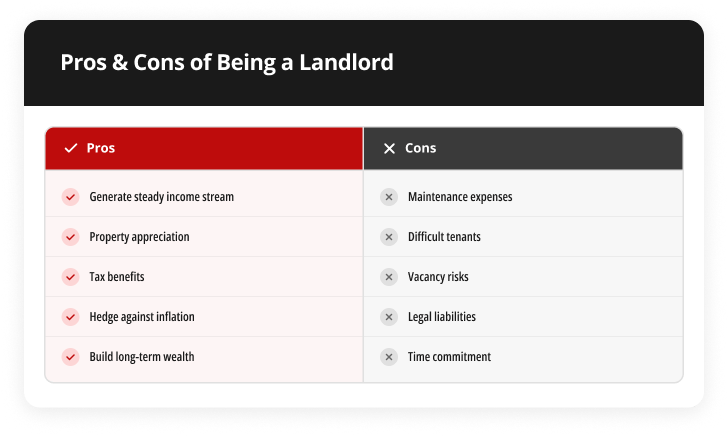 Pros of Being a Landlord
- Monthly rental income: While there is certainly work that goes into being a landlord, it can be a mostly hands-off way to bring in a significant amount of income each month.
- Property appreciation: Real estate tends to steadily appreciate in value over time. This is good news for landlords who plan on holding rental properties long-term, as they can tap into that appreciation by refinancing or selling.
- Tax deductions: Rental property owners can often deduct things like mortgage interest, property taxes, insurance premiums, management fees, maintenance costs, and depreciation from their taxable income.
- Inflation hedge: As inflation rises, so do property values and market rents. Real estate has historically been one of the more reliable ways for individual investors to hedge against inflation.
- Long-term wealth building: Rental properties let you build equity using a tenant’s rent payments to service the debt. This accumulation of equity can lead to real wealth in the long run.
Cons of Being a Landlord
- Maintenance expenses: As a landlord, you’re responsible for taking care of virtually all property maintenance. While regular maintenance is usually a fairly minor expense, you’ll inevitably run into bigger expenses such as plumbing emergencies or a roof needing to be replaced.
- Difficult tenants: Late rent, lease violations, property damage, and contentious relationships are part of the reality for most landlords at some point. While eviction can be an option at a certain point, this process is extremely slow and difficult in many states.
- Vacancy risks: Vacant units sitting on the market for weeks or months can put a huge strain on a landlord’s finances. That’s because you still need to cover the mortgage, taxes, and insurance. All while no money is coming in.
- Legal liabilities: As a landlord, it’s your responsibility to stay up-to-date with and in compliance with local laws and regulations. Failure to do so can lead to fines or lawsuits.
- Time commitment: Being a landlord requires time and energy. You’ll need to market the property, screen tenants, respond to maintenance requests, manage records, and so on. This is why many landlords hire a property manager.
Factors That Determine Whether Being a Landlord Is Worth It
Take these factors into account if you’re trying to decide if renting out a house and being a landlord is worth it.

Location and Rental Demand
Where you buy matters more than almost anything else. Properties in cities and suburbs with growing populations, major employers, or constrained housing supply tend to maintain value, attract qualified tenants, and support rent increases over time.
On the other hand, markets with shrinking populations or flat economies are a harder place to generate returns. Before buying, it’s worth studying the local job market and population growth in a particular region to better judge the prospects of a rental property.
Financing and Interest Rates
Both mortgage rates and the type of loan you finance the property with can have a big impact on your profits. Higher rates increase the cost of a mortgage and lead to narrower margins. Additionally, using loan products that aren’t well-suited to rental properties may lead to inflated rates or terms that interfere with your cash flow.
As you search for a loan, make sure to work with a lender that is familiar with financing rental properties. They can recommend products such as a DSCR loan, which is investor-friendly and allows borrowers to qualify based on a property’s cash flow.
Property Type
Single-family homes are easier to finance and manage, tend to attract longer-term tenants, and are generally simpler to sell when needed. Multifamily properties can bring in more income when all units are occupied, but require more capital and more management bandwidth. Vacation rentals can generate premium income in the right markets but come with higher turnover, seasonal vacancy, and increasingly complex local regulations.
Self-Managing vs. Hiring a Property Manager
Self-managing is for landlords who are willing to be hands-on in exchange for keeping all of the rental income for themselves. This can be a good route for investors who own 1-2 properties and have the know-how and bandwidth to effectively manage them.
However, as a real estate portfolio grows, many investors delegate management tasks to property management companies. While these companies will typically charge around 10% of monthly rent, they can save landlords significant amounts of time and energy while ensuring that they remain in compliance with local laws and regulations.
Alternatives to Traditional Landlording
If you want to invest in real estate but think being a landlord might not be a good fit, consider these alternatives.
- Real estate investment trusts (REITs): REITs let you invest in diversified real estate portfolios via the stock market. This is an affordable, low-risk way to start investing in real estate.
- Real estate crowdfunding: These platforms allow investors to pool capital in private deals. Minimum investment amounts vary, but some platforms accept non-accredited investors with as little as a few hundred dollars.
- Short-term rentals: While many landlords typically take on long-term tenants, short-term rentals can be profitable in metro hubs and vacation spots. Running a short-term rental still tends to be pretty hands-on, but it tends to offer more flexibility and higher short-term profits compared to long-term rentals.
- House hacking: With this strategy, you buy a multi-unit property, live in one unit, and rent out the others. You don’t even necessarily need an investment property loan — you can do this with a property financed with a VA loan or FHA loan if you want.
- Turnkey rentals: Turnkey rentals are fully renovated, tenant-occupied properties sold with property management already in place. They’re a more hands-off option from day one, though they tend to carry a premium purchase price.
Tips for Making Landlording More Profitable
Follow these tips to optimize your profits as a landlord.
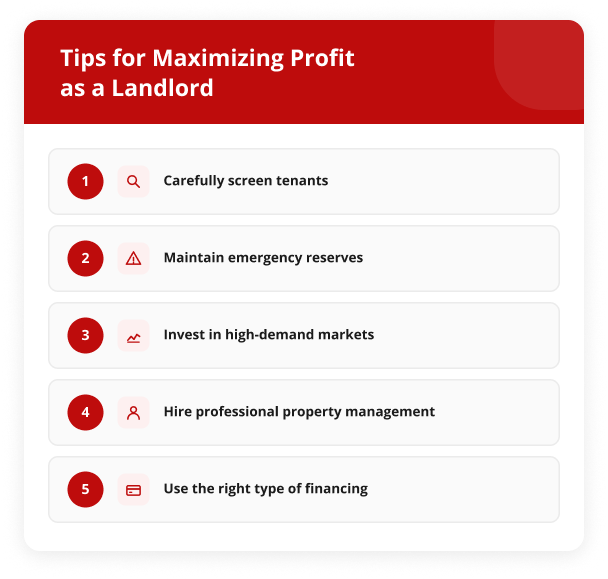
1. Screen Tenants Carefully
A strong tenant is the foundation of a profitable rental. Spend the time upfront on a thorough process where you check their credit, verify their income, and speak to their references. A good tenant can bring in a steady income for years, whereas a single bad tenant can lead to endless problems and costs.
2. Keep Emergency Reserves
Most experienced landlords recommend holding 3-6 months of operating expenses in liquid savings. This buffer protects you against vacancy, major repairs, or economic disruptions without forcing you into a distressed sale or missed mortgage payment.
3. Invest in High-Demand Markets
Do your research before buying. Look for markets with low vacancy rates, job growth, and in-migration trends. Properties located in regions with diversified local economies are often a good bet because the city doesn’t rely on a single company or industry. Another strategy could involve purchasing a rental property nearby a university campus or military base to house a specific population. Use tools like our free rent estimator to explore what properties across the country could potentially rent for.
4. Use Professional Property Management
If you’re managing more than a couple of properties, or if your schedule doesn’t allow for a responsive landlord-tenant relationship, professional management is almost always worth the cost. It tends to improve tenant quality, reduce vacancy duration, and free up your time, which can be immensely valuable in and of itself.
5. Secure Competitive Financing
It’s crucial to secure the right type of financing at a competitive rate in order to meet your long-term financial goals. Working with a lender who specializes in investment real estate — and who can structure the right loan for your situation — is one of the most impactful steps you can take before closing.
See If Becoming a Landlord Is Right for You
Griffin Funding specializes in loans for real estate investors, including DSCR loans, bank statement loans, and conventional investment property mortgages. Reach out to our team to explore your options or get started online today and lock in your rate.
Frequently Asked Questions
Is being a landlord passive income?
For tax purposes, the IRS generally classifies rental income as passive. In practice, being a landlord requires some hands-on work. Tenant screening, maintenance coordination, lease renewals, and legal compliance all require your time and attention.
What are the hidden costs of owning a rental property?
Beyond mortgage and property taxes, landlords often underestimate costs like:
- Landlord insurance
- Property management fees
- Leasing fees between tenants
- Vacancy periods
- Accounting and legal costs
- HOA dues when applicable
When weighing the pros and cons of being a landlord in 2026, make sure to consider more than just the mortgage — factor in all of the potential costs involved.
How does income from a rental property compare to stock market returns?
Both the stock market and housing market have delivered strong long-term returns, but they work differently. The S&P 500 has historically averaged around 10% annually, while real estate returns vary by market and depend heavily on leverage and management.
The key advantage of real estate is the ability to finance a large asset with a relatively small down payment. This helps you build wealth over time. On the other hand, stocks offer far greater liquidity and are much more hands-off.
Find the best loan for you. Reach out today!
Get Started
Bill Lyons is the Founder, CEO & President of Griffin Funding. Founded in 2013, Griffin Funding is a national boutique mortgage lender focusing on delivering 5-star service to its clients. Mr. Lyons has 25 years of experience in the mortgage business. Lyons is seen as an industry leader and expert in real estate finance. Lyons has been featured in Forbes, Inc., Wall Street Journal, HousingWire, and more. As a member of the Mortgage Bankers Association, Lyons is able to keep up with important changes in the industry to deliver the most value to Griffin's clients. Under Lyons' leadership, Griffin Funding has made the Inc. 5000 fastest-growing companies list six times in its 13 years in business. Follow his updates on LinkedIn.
 Outstanding Client Experience
 Specialized Lending Solutions
 Direct-to-Consumer Advantage
 We're Advisors, NOT Salespeople
 Effortless Digital Mortgage Platform
Featured In



Recent Posts
Mortgage rates hit 18% in 1981. Here’s how that compares with buying a home today
Borrowers shopping for a 30-year fixed mortgage in the fall of 1981 saw rates peak at 18.63% in the week of Oc...

Average home equity gains topped $200,000 in six states as renters faced heavy housing costs
A rising home value can mean two very different things on the same street. For an established homeowner, it ca...
A 1-percentage-point mortgage rate rise can outrun 4 years of rent growth
The Federal Reserve raised interest rates on Sept. 16 for the first time since 2023. For rental property inves...