

The Ultimate Home Maintenance Checklist for Every Season
 Written by Bill Lyons
KEY TAKEAWAYS
- Routine home maintenance protects your property value and helps prevent small issues from turning into costly repairs.
- Seasonal, annual, and monthly checklists keep your home ready to refinance, supporting stronger appraisals and smoother loan approvals.
- Energy-efficient upkeep lowers utility bills and extends the life of major systems like your roof, plumbing, and HVAC.
- Well-maintained homes preserve and grow equity, giving you more flexibility when using a home equity loan, HELOC, or refinancing option in the future.











 Outstanding Client Experience
 Specialized Lending Solutions
 Direct-to-Consumer Advantage
 We're Advisors, NOT Salespeople
 Effortless Digital Mortgage Platform
Staying on top of regular home upkeep helps protect your investment and keeps your property in strong financial shape. A clear, organized home maintenance checklist makes it easier to preserve value, avoid surprises, and plan for long-term improvements.

Why Every Homeowner Needs a Home Maintenance Checklist
Below are a few reasons why every homeowner can benefit from using a checklist for regular home maintenance.
Protecting Your Home’s Value
A home maintenance checklist is one of the simplest tools for protecting your property’s long-term value. Regular upkeep helps preserve resale value, prevent avoidable damage, and ensure your home remains appealing to future buyers or appraisers. It also plays a key role when refinancing or accessing equity, since lenders evaluate your home’s condition before approving financing.
Staying proactive with maintenance reinforces one of the core benefits of homeownership: building and protecting wealth over time. Whether you’re just settling in or years into ownership, think of it as your personal new homeowner maintenance guide for safeguarding both comfort and equity.
Preventing Expensive Repairs
Small issues can quickly turn into major structural problems if they’re ignored. A missing roof shingle today could lead to water intrusion and costly structural damage tomorrow. Skipping annual HVAC servicing may reduce efficiency and eventually require full system replacement. Minor plumbing leaks, if left unchecked, can cause mold growth, drywall damage, and foundation concerns.
That’s why consistent attention to home maintenance tasks that prevent expensive repairs is key. Routine roof inspections, seasonal HVAC tune-ups, and regular plumbing checks cost far less than emergency fixes. Preventative maintenance not only saves money but also keeps your home in strong condition for appraisal, resale, or equity-based financing.
Improving Energy Efficiency
Energy efficiency isn’t just about comfort; it directly impacts your monthly expenses and your home’s long-term value. Simple home improvements like sealing window drafts, adding weather stripping, and insulating attics can significantly reduce energy loss. Following a regular HVAC maintenance schedule ensures your heating and cooling systems operate efficiently and last longer.
Homeowners can also use a home energy audit checklist to identify hidden inefficiencies, from outdated appliances to poor insulation. By addressing these issues early, you lower utility bills, reduce strain on major systems, and make your property more attractive to future buyers. Over time, energy-smart maintenance strengthens both your home’s livability and its financial performance.
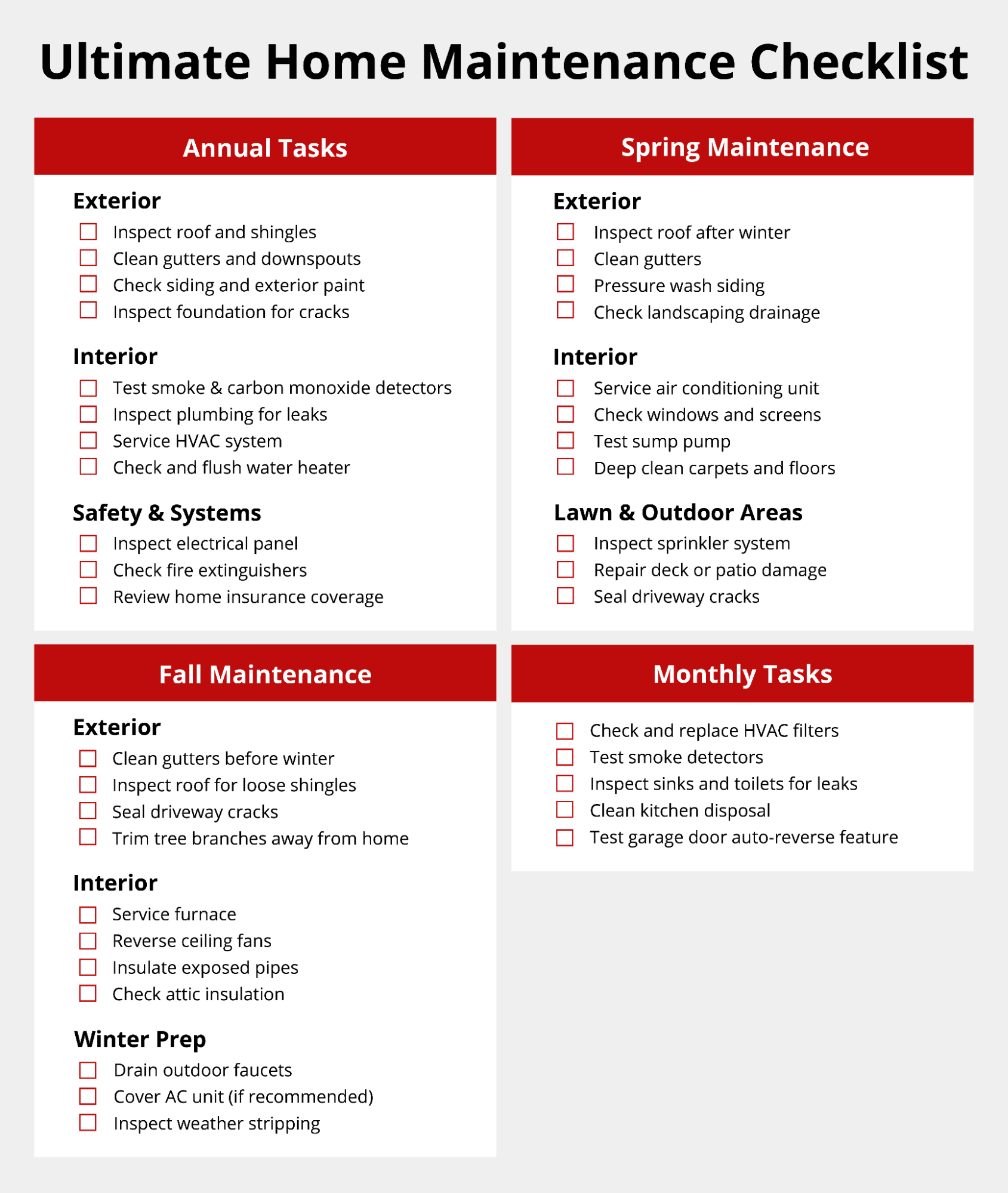 Annual Home Maintenance Checklist (Essential Tasks)
Exterior
-
- Inspect roof and shingles: Look for missing, curling, or damaged shingles, soft spots, and signs of leaks in the attic. Catching minor wear early helps prevent water intrusion and costly structural damage.
- Clean gutters and downspouts: Remove leaves and debris to ensure proper drainage. Clogged gutters can cause water to back up under shingles or pool near your foundation.
-
- Check siding and exterior paint: Examine siding for cracks, warping, or rot. Touch up peeling paint to protect against moisture and pest intrusion.
- Inspect foundation for cracks: Walk the perimeter of your home and look for visible cracks or uneven settling. Small cracks can often be sealed, but larger ones may require professional evaluation.
Interior
- Test smoke and carbon monoxide detectors: Replace batteries as needed and test each unit to ensure proper function. Smoke detectors typically last 10 years; carbon monoxide detectors often last 5-10 years depending on the manufacturer.
- Inspect plumbing for leaks: Check under sinks, around toilets, and behind appliances for moisture, corrosion, or mold. Even slow drips can increase water bills and cause hidden damage.
- Service HVAC system: Schedule professional servicing to clean coils, check refrigerant levels, inspect ductwork, and replace filters. Following an annual HVAC maintenance checklist improves efficiency and extends system lifespan.
- Check water heater: Inspect for rust, corrosion, or pooling water. Flushing the tank annually can remove sediment buildup and improve performance.
Safety and Systems
-
- Inspect electrical panel: Look for tripped breakers, signs of overheating, or corrosion. If you notice flickering lights or frequent breaker trips, consult a licensed electrician.
- Check fire extinguishers: Ensure extinguishers are fully charged and accessible. Replace or recharge units that are expired or used.
- Review home insurance coverage: Confirm your policy reflects your home’s current value and any upgrades. Adequate coverage helps protect your investment from unexpected events.
Spring Home Maintenance Checklist

Exterior Spring Tasks
- Inspect roof after winter: Check for ice dam damage, loose shingles, and debris buildup caused by snow and wind.
- Clean gutters: Remove leftover winter debris to prevent spring rain from causing overflow and foundation issues.
- Pressure wash siding: Wash away mold, mildew, and dirt that accumulated during winter months to protect exterior materials.
- Check landscaping drainage: Ensure soil slopes away from the foundation and downspouts direct water away from your home.
Interior Spring Tasks
- Service air conditioning unit: Schedule a tune-up before peak summer use. Clean coils, replace filters, and check refrigerant levels.
- Check windows and screens: Repair torn screens and reseal gaps around windows to improve ventilation and energy efficiency.
- Test sump pump: Pour water into the pit to confirm it activates properly (especially important during spring rains).
- Deep clean carpets and floors: Remove salt, dirt, and allergens tracked in during winter to maintain indoor air quality.
Lawn and Outdoor Areas
- Inspect sprinkler systems: Check for leaks, broken heads, and proper water pressure before regular use.
- Repair deck or patio damage: Look for loose boards, cracked pavers, or signs of rot. Reseal wood surfaces as needed.
- Seal driveway cracks: Fill minor cracks to prevent water from seeping in and expanding during temperature changes.
Fall Home Maintenance Checklist
Exterior Fall Tasks
- Clean gutters before winter: Clear out leaves and debris to prevent ice dams and water backup during freezing conditions.
- Inspect roof for loose shingles: Replace or secure shingles to prevent winter storms from worsening existing damage.
- Seal cracks in driveway: Address small cracks before freezing temperatures cause expansion and larger damage.
- Trim tree branches away from home: Cut back overhanging limbs to reduce the risk of storm damage and roof impact.
Interior Fall Tasks
- Service furnace: Schedule professional maintenance to inspect burners, heat exchangers, and filters before cold weather sets in.
- Reverse ceiling fans: Switch fans to clockwise rotation to push warm air downward and improve heating efficiency.
- Insulate exposed pipes: Wrap pipes in unheated areas like basements or garages to prevent freezing.
- Check attic insulation: Ensure adequate insulation depth to reduce heat loss and lower winter energy costs.
Winter Preparation
- Drain outdoor faucets: If you’re wondering how to prevent costly winter home repairs, be sure to shut off interior valves and drain exterior spigots to prevent frozen pipes.
- Cover AC unit (if applicable): Protect outdoor condenser units from ice and debris buildup during winter months. Only cover your AC unit if recommended by the manufacturer.
- Inspect weather stripping: Replace worn seals around doors and windows to block drafts and reduce heating expenses.
Monthly Home Maintenance Tasks
- Check HVAC filters: Inspect and replace air filters as needed (typically every 1–3 months). Clean filters improve airflow, lower energy bills, and reduce strain on your heating and cooling system.
- Test smoke detectors: Press the test button on each unit and replace batteries if needed. Monthly checks help ensure your home stays protected year-round.
- Inspect sinks and toilets for leaks: Look for dripping faucets, running toilets, or moisture under cabinets. Addressing small plumbing issues early prevents water damage and mold growth.
- Clean kitchen disposal: Flush with hot water and baking soda or vinegar to reduce buildup and odors. Avoid putting grease or fibrous foods down the drain.
- Inspect garage door operation: Test the auto-reverse safety feature and listen for unusual grinding or squeaking. Lubricate moving parts and check tracks to ensure smooth operation.
How Regular Home Maintenance Impacts Refinancing and Home Equity
Consistent upkeep plays a direct role in your home’s appraised value, which is critical when refinancing or tapping into equity. Well-maintained homes typically face fewer inspection-related delays and are less likely to require lender-mandated repairs before closing.
For homeowners pursuing a conventional refinance, a well-maintained home can support a higher valuation and better loan terms. Those using VA loans, including a VA cash-out refinance, must also meet minimum property requirements, making preventative maintenance especially important. A clean appraisal can increase proceeds from a cash-out refinance while protecting long-term equity growth.
Ultimately, maintaining your home strengthens its position as a reliable home equity solution, whether you’re lowering your rate, restructuring debt, or accessing funds for future goals.
How to Bankroll Larger Home Improvement Projects and Renovations
While routine maintenance protects your property, larger renovations (like kitchen remodels, room additions, or major system upgrades) often require financing. Fortunately, homeowners have several options depending on their goals and eligibility.
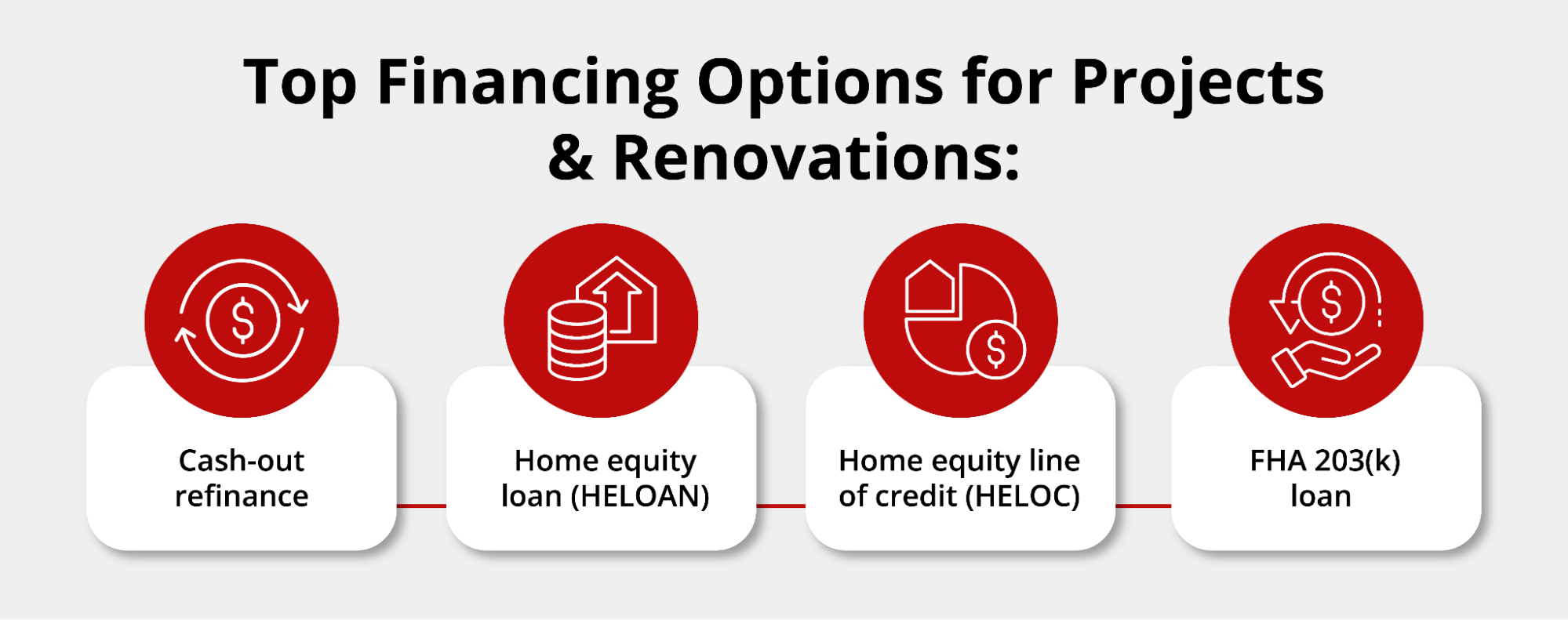
- Cash-out refinance: A cash-out refinance allows you to replace your existing mortgage with a new, larger loan and take the difference in cash. This option is available through traditional conventional loans, as well as government-backed programs like VA and FHA loans. For eligible borrowers, VA cash-out refinancing can offer competitive terms with flexible guidelines.
- Home equity loan: A home equity loan provides a lump sum with fixed payments, making it predictable for major renovation budgets. For investors or rental property owners, specialized products like a DSCR HELOAN may allow access to equity based on property cash flow rather than personal income.
- Home equity line of credit (HELOC): A home equity line of credit allows you to tap into your home equity and draw on funds as needed, making it an ideal solution for home improvement projects with variable costs. A fixed-rate HELOC can also offer stability while allowing flexible draws during the renovation period.
- FHA 203(k) loan: Another option is the FHA 203(k) renovation loan, which combines the purchase or refinance of a home with renovation costs into one mortgage. This can be particularly useful when improvements are needed to meet appraisal or safety standards.
Choosing the right financing path depends on your equity position, long-term plans, and whether you want a lump sum or flexible access to funds. With the right strategy, your home can continue to serve as both a comfortable living space and a powerful financial asset.
Stay Ahead of Repairs and Protect Your Investment
Staying proactive with home maintenance isn’t just about avoiding repairs; it’s about protecting one of your most valuable financial assets. A well-maintained property preserves resale value, strengthens appraisal results, and helps you qualify for better loan terms when it’s time to access your equity.
At Griffin Funding, we offer a wide range of home equity and refinance options designed to fit your goals. You can also use the Griffin Gold app to compare mortgage options, monitor your home’s value, and explore personalized financing opportunities, all in one place.
With the right maintenance plan and the right lending partner, you can protect your investment and unlock its full potential.
Find the best loan for you. Reach out today!
Get StartedFrequently Asked Questions
How often should home maintenance be done? 
How much should I budget annually for home maintenance?
Is home maintenance tax deductible?

Bill Lyons is the Founder, CEO & President of Griffin Funding. Founded in 2013, Griffin Funding is a national boutique mortgage lender focusing on delivering 5-star service to its clients. Mr. Lyons has 25 years of experience in the mortgage business. Lyons is seen as an industry leader and expert in real estate finance. Lyons has been featured in Forbes, Inc., Wall Street Journal, HousingWire, and more. As a member of the Mortgage Bankers Association, Lyons is able to keep up with important changes in the industry to deliver the most value to Griffin's clients. Under Lyons' leadership, Griffin Funding has made the Inc. 5000 fastest-growing companies list five times in its 12 years in business.
Recent Posts
The Ultimate Home Maintenance Checklist for Every Season
Why Every Homeowner Needs a Home Maintenance Checklist Below are a few reasons why every homeowner can benefit...

Do HELOCs Have Closing Costs?
Yes, most lenders charge closing costs on a home equity line of credit, though they’re typically lower than ...
Does a HELOC Require an Appraisal?
Yes. In most cases, a lender will require an appraisal for a home equity line of credit to determine your home...